

Are you concerned about how global oil prices affect everyday products like paper? The complex world of international trade means distant events can ripple through industries, surprisingly influencing the paper market here at home.
Venezuelan oil exports to China1 can impact the paper market by influencing energy and logistics costs2 for paper production3 and transportation. Additionally, rising petroleum-derived plastic costs4 might shift packaging demand towards paper, creating both challenges and opportunities for the industry.
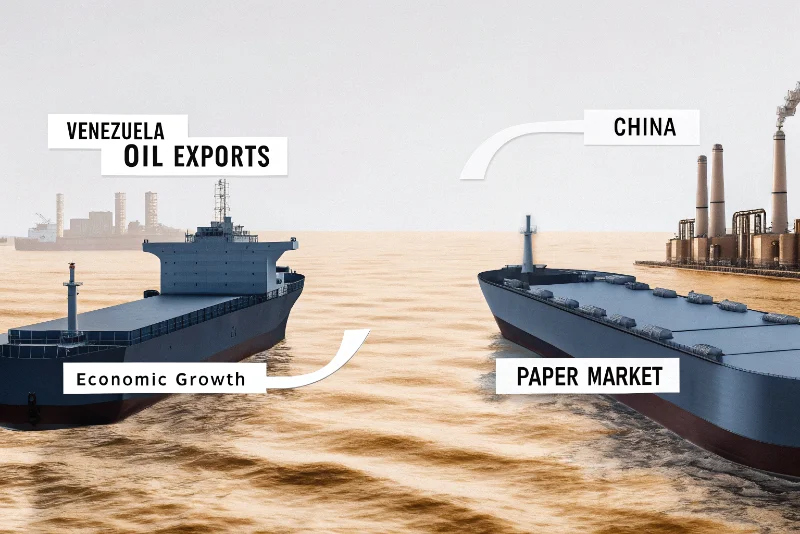
As someone deeply involved in manufacturing and global supply chains, I see firsthand how interconnected our world truly is. Events thousands of miles away can directly affect the cost of materials for industries like paper. Let me share how these global shifts play out in the paper market5.
Does the Price of Oil Directly Affect Paper Manufacturing Costs?
Worried about rising prices for paper products? You might be surprised how far-reaching the causes can be. Global energy shifts can make even basic goods more expensive. Let's break down how oil prices, even indirectly, can drive up the cost of making paper.
Yes, the price of oil directly affects paper manufacturing costs because higher international oil prices lead to increased energy expenses for paper mills, which are highly energy-intensive operations6. These elevated energy costs7, making up a significant portion of production, are then passed down the supply chain.
In my experience, many people do not realize how energy-hungry the paper industry is. It is not just about wood; it is about heat, power, and chemistry. I have learned that even if our factories do not burn crude oil, global oil prices8 still cast a long shadow over our operations.
How are Energy Costs Linked to Oil Prices in Paper Production?
Paper manufacturing is an energy-intensive process that consumes a lot of power. My experience shows that energy often accounts for 15-25% of the total production cost for a paper mill. This includes electricity, natural gas, and sometimes even coal. When Venezuelan oil exports are restricted, it can push up global oil prices. This rise then has a domino effect on the cost of other energy sources. Even if a paper mill does not directly use crude oil, the price of electricity generated from natural gas or coal often correlates with oil prices. For example, if the cost of natural gas, used to power boilers and drying processes in paper mills, goes up because of higher global energy prices, the paper mill's operational costs immediately increase. I have seen how quickly these changes in energy prices can affect our budget planning.
What is the Impact on Raw Material Costs for Paper?
While wood fiber (pulp) is the primary raw material for paper, chemicals are also used in various stages, from bleaching to coating. Many of these chemicals are petroleum-derived. A rise in oil prices can lead to higher costs for these chemical inputs9. This adds another layer of cost pressure on paper producers. However, China's paper industry10 has been investing in internal circular economy processes. This includes using recycled paper and optimizing energy efficiency11. This can help to partially buffer against external energy shocks. Also, government policies aimed at supporting key industries might offer subsidies or other measures to stabilize energy costs for essential sectors like paper manufacturing.
| Cost Component | Impact of Higher Oil Prices | Percentage of Production Cost |
|---|---|---|
| Electricity | Increased generation cost | 10-15% |
| Natural Gas | Higher fuel prices | 5-10% |
| Coal | Increased due to overall energy market | Varies |
| Petroleum-Derived Chemicals | Higher input costs | 5-10% |
Can Rising Oil Prices Make Plastic Packaging More Expensive Than Paper?
Are you struggling to balance cost and sustainability in packaging choices? The price of oil is a hidden driver behind many packaging decisions. Let's see how fluctuating oil prices can actually shift demand from plastic to paper.
Rising oil prices can indeed make plastic packaging more expensive than paper because plastics like polyethylene and polypropylene are derived from petroleum. When oil costs increase, so do plastic production costs, potentially making paper packaging a more cost-effective and attractive alternative for many businesses.
I have watched many businesses grapple with packaging choices. Often, it comes down to cost and performance. What I have seen is that when the price of oil climbs, the economics of packaging change significantly. This can create a surprising opportunity for the paper industry.
Why is Petroleum Key to Plastic Packaging Costs?
Many common plastics, especially those used in packaging like polyethylene (for bags and films) and polypropylene (for containers and films), are produced from petroleum derivatives such as ethylene and propylene. These are refined from crude oil. Therefore, a direct correlation exists: when the price of crude oil goes up, the cost of these basic plastic building blocks also increases. This, in turn, makes the production of plastic packaging more expensive for manufacturers. I have seen how these direct links in the petrochemical supply chain quickly translate into higher quotes for plastic materials. This connection means that global oil market shifts have a very tangible impact on the pricing of plastic packaging solutions.
How Do Rising Plastic Costs Influence Paper Demand?
As plastic packaging becomes more expensive due to higher oil prices, businesses, especially those focused on cost-efficiency, begin to re-evaluate their packaging choices. For certain applications, paper packaging, which might have previously been seen as a slightly more expensive or less durable option, suddenly becomes more competitive. This economic shift is often coupled with growing environmental concerns. Many companies are already looking for sustainable alternatives to plastic. Higher plastic prices simply provide an additional financial incentive to make the switch to paper-based packaging, which is often perceived as more environmentally friendly. For example, I have observed a greater interest in paper bags replacing plastic ones for retail, or paperboard containers substituting plastic trays in food service, particularly when plastic raw material costs12 spike significantly. This creates a structural opportunity for the paper market, even amidst broader economic challenges13.
| Packaging Type | Primary Raw Material | Impact of Higher Oil Prices | Demand Shift Potential |
|---|---|---|---|
| Plastic | Petroleum derivatives | Significantly Higher Cost | Decreased |
| Paper | Wood pulp, recycled paper | Indirect (energy, logistics) | Increased |
Will Higher Oil Prices Drive Up the Cost of Transporting Paper Products?
Are you concerned about the final price of paper products you buy? Global energy costs do not just affect manufacturing; they impact every step of delivery. Let's explore how rising oil prices can directly inflate the cost of getting paper from the factory to your shelf.
Yes, higher oil prices will drive up the cost of transporting paper products because fuel is a major expense for logistics. Increased fuel costs for trucks, ships, and other carriers directly raise overall shipping expenses, which then affects the final price of paper products for consumers or suppliers.
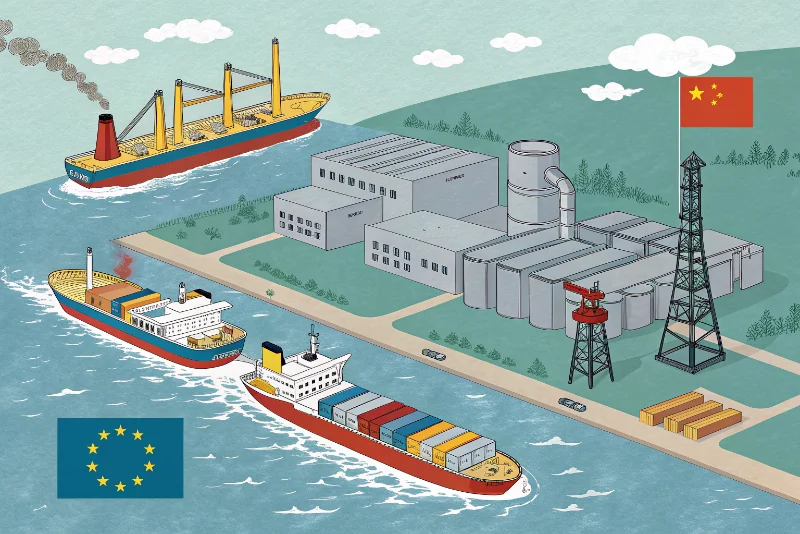
As someone who manages logistics for products going all over the world, I know that transportation is one of the most variable and impactful costs. When the price of oil shifts, it is not just a minor adjustment; it is a fundamental change that affects every part of the supply chain.
How Does Fuel Cost Affect Logistics for Paper?
Transportation is an unavoidable part of the paper supply chain, from moving raw materials like pulp to delivering finished paper products to distributors and retailers. Trucks, ships, and even trains rely heavily on fossil fuels. Diesel fuel for trucks, bunker fuel for cargo ships – these are all directly linked to global oil prices. When oil prices surge, the cost of these fuels rises immediately. This translates directly into higher shipping rates charged by logistics companies. I have seen how quickly carriers adjust their fuel surcharges14 when oil prices climb, sometimes almost overnight. This means that the paper products, even before they reach the consumer, have accumulated higher costs. These increased costs are a real challenge for maintaining competitive pricing.
What is the Impact on Profit Margins and Consumer Prices?
For paper manufacturers, higher logistics costs2 can either compress profit margins15 or necessitate price increases for their products. Many companies operate on tight margins, so even a slight increase in transportation expenses can have a significant impact on their bottom line. Ultimately, these increased costs are often passed on to the end consumer or to businesses further down the supply chain. This means that the price you pay for notebooks, printer paper, or packaged goods that use paper could indirectly go up due to events in the global oil market. However, China's vast internal logistics network and sometimes government-controlled fuel prices can offer some cushioning. Companies also look for optimized routes and more efficient shipping methods to counter these rising costs. This constant adaptation is part of managing global supply chain volatility.
| Logistics Stage | Transport Mode | Fuel Type Affected | Impact on Paper Costs |
|---|---|---|---|
| Raw Material | Trucks, Trains, Ships | Diesel, Bunker Fuel | Higher inbound costs |
| Production | Internal handling | Electricity (indirect oil) | Minor indirect cost |
| Distribution | Trucks, Ships, Air Cargo | Diesel, Jet Fuel | Significantly higher outbound costs |
| Retail | Local delivery | Diesel, Gasoline | Increased local delivery charges |
Conclusion
Venezuelan oil exports to China1 can raise paper costs via energy and logistics. While presenting short-term challenges, China's paper industry10 has internal strengths and potential opportunities from plastic substitution to mitigate these impacts.
References
Understanding this connection can reveal broader economic impacts and trade dynamics. ↩
Discover how logistics costs can significantly influence product pricing and availability. ↩
Understanding production processes can help you appreciate the complexities of the paper industry. ↩
Gain insights into the relationship between oil prices and plastic manufacturing. ↩
Explore how various global events shape the paper industry and its pricing. ↩
Explore which sectors face the highest energy costs and their implications. ↩
Learn about the critical role energy plays in production costs across sectors. ↩
Explore the ripple effects of oil prices across different sectors. ↩
Understanding chemical inputs can shed light on production complexities. ↩
Stay informed about developments in one of the world's largest paper markets. ↩
Discover strategies that can help reduce costs and environmental impact. ↩
Learn how fluctuations in raw material prices can impact overall production costs. ↩
Stay updated on the hurdles that the paper industry must navigate. ↩
Understanding fuel surcharges can help you grasp the dynamics of shipping expenses. ↩
Learn how various costs impact profitability in the manufacturing sector. ↩